





By Chris Sturm
Originally published in Streetsblog USA
This essay focuses on lessons for the author’s home state of New Jersey, but we hope it will be inspiring for readers in other communities, too.
For four months last fall, my lifestyle changed dramatically when my husband and I lived car-free. As life-long suburbanites, we have always driven a lot to get around. I was the mom-in-the-minivan, and am now the professional-in-a-Prius. But when we took an overdue sabbatical, we lived near universities in three developed countries — England, Germany, and Japan — where everything we needed was within easy reach by foot, bike, bus, or train. This experience convinced me that New Jersey can and should pull out the stops to deliver more of these options for all of its people — young and old, commuters and job-seekers, the affluent, and those who cannot afford a car.
Our Car-Free Experience
Our first stay was in Cambridge, England, a small city of 145,000 inhabitants. Cambridge is called England’s “city of cycling,” and we quickly figured out that renting bikes was our best option, whether for a two-mile commute, running errands, and exploring the countryside. There were initial terrifying moments as we adjusted to riding on the left-hand side of the road, learned the signs for where cyclists are (and are not) allowed, and navigated traffic. Thankfully, bus and car drivers go slowly and defer to cyclists. Special street features kept us safe, including my favorite: a dedicated zone at traffic lights just for cyclists, so they can go in front of the cars while they wait for their very own traffic signal, which allows them to pass through the intersection first. Meanwhile, I managed to indulge my lifelong obsession for pastries and a new penchant for fish and chips without gaining a pound.
In early October, we moved to Stuttgart, Germany, a growing mid-size city of 630,000. Notwithstanding its fame as an automotive headquarters (Porsche, Mercedes-Benz), Stuttgart has an amazing downtown for walkers and a robust bus, subway, and local train network. Our apartment was located two blocks from downtown, and literally on top of a subway stop (complete with a first floor bakery). Because the city is so compact and destinations are clustered near stations, we never needed a ride-share, even for unplanned medical visits, suburban musical theater, downtown opera and ballet. I bought groceries every few days at nearby stores and seductive indoor and outdoor markets, loading up my backpack and building bone density as I walked home. I used the public bike share program and rode for exercise through a beautiful urban park, walked to my favorite restaurants, and conveniently hopped on the regular, reliable bus when met with the inconvenience of rain.
In mid-November we landed in Tokyo, the world’s second largest metro area with 23 million residents. Our neighborhood, located between Tokyo University and Ueno Park, surprised us with its low-rise buildings, bikeability, and livability. Despite Tokyo’s reputation as a sprawling, busy city, parents use cargo bikes and kids walk to school. Armed with Google Maps on my smartphone, I happily walked four minutes to the subway station and traveled all over the city. Street crossings are safe, and drivers and pedestrians alike follow the rules. My Japanese friend let me try her e-bike, which I found to be really cool. However, I chickened out on renting one, which I hope to change soon. Our neighborhood was full of tiny, cheap restaurants ranging from a humble, mouthwatering ramen place to cozy izakaya (pubs) with cold beer and grilled fish, to an excellent western bakery, but with all the walking, my high cholesterol actually diminished.
Secret To Success: What Cambridge, Stuttgart and Tokyo Do Right
These three places — small, medium, and giant — all deliberately prioritize the development patterns and transportation systems that deliver great options for getting around. The three places we visited have:
- Compact development and a mix of uses so every day trips — to work, school, shopping, the park — are short.
- Lots of green space in public parks, rather than in private yards.
- Streets designed for all users, with ample sidewalks, all kinds of bike lanes and paths, benches, signage, traffic signals, etc.
- A culture of “Sharing the Road” rather than cars being “King of the Road.”
- Less car parking, mostly underground or in garages. Plenty of bike parking.
None of this happens on its own. Consider these ambitious walk-bike-ride initiatives in the news:
- The City of Cambridge is considering a congestion charge proposed by the Greater Cambridge Partnership to reduce car traffic and raise revenues for better bus service. It’s highly controversial, but London and Birmingham offer precedent. Meanwhile, the Cambridge Cycling Campaign actively advances the needs of cyclists.
- To return transit ridership to pre-pandemic levels and lower the cost of living, the German government offered a cheap (nine euros (about $10) per month) transit pass last summer. It was wildly popular and saved an estimated 8 million tons of carbon emissions by reducing car trips. The government now plans to launch a permanent “D-ticket” on May 1 for €49 per month to offer “a strong argument to switch from the car to a climate-friendly means of transit,” at an estimated cost of €3 billion annually.
- Japan’s largest private railway firm, JR East, recently announced an ambitious goal to expand its property asset management model in order to better ensure the financial sustainability of its transit systems. JR East and other Japanese railway firms generate substantial funds for their system operations from station-area real estate. Transit-oriented development not only generates income for rail operations, but also grows ridership.
New Jersey Has a Head Start on Becoming a National Mobility Leader
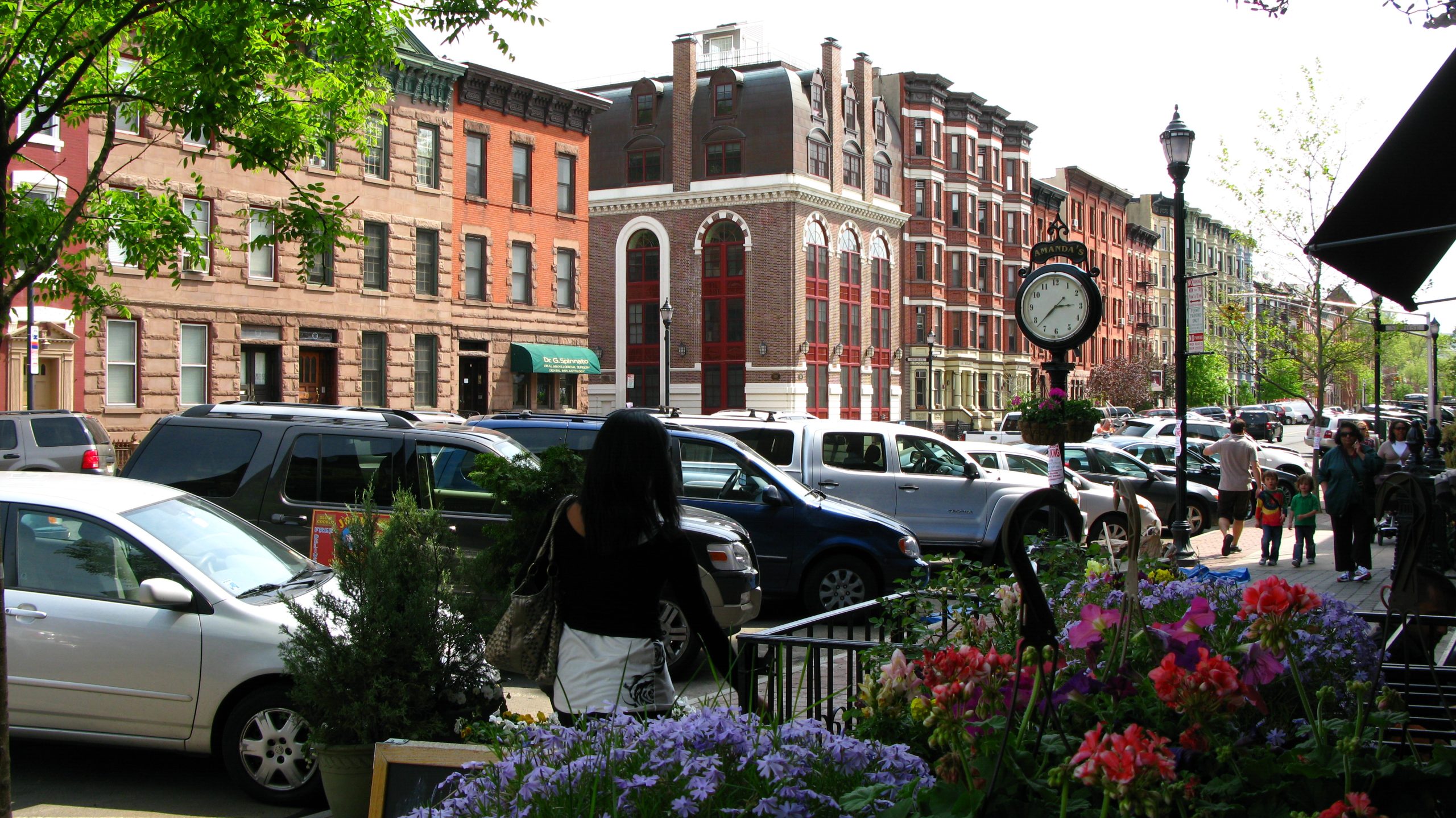
New Jersey is well-positioned to act on lessons from abroad. One reason is that New Jersey can “place-make” as well as anywhere. This year, I’ve had the pleasure of meeting people in Haddonfield, Highland Park, New Brunswick, Somerville, Trenton, and Bordentown, all of which boast a walkable town center. On weekends we go further afield: biking along the spectacular Hudson River waterfront and grabbing a bite to eat in Hoboken or Jersey City; visiting transit- and beach-accessible Ocean Grove and Asbury Park; and walking between Newark Penn Station, Harrison’s Red Bull Stadium, and the Ironbound’s food scene.
When it comes to improving walk-bike-ride opportunities, New Jersey is not starting from scratch. The state’s public transportation system of buses, rail, and light rail is the nation’s largest statewide system, and serves nearly one million riders per day. New Jersey is the nation’s densest state, and has a legacy of historic walkable villages, towns, and cities.
The local leaders with whom I’ve spoken are excited about the prospect of developing a robust walk-bike-ride network in their municipality and are hungry for help with project planning and design, the essential first step to accessing state and federal capital funds for construction.
Keeping the Car-Free Magic Alive Now that I Am Home
My sabbatical felt life-changing. The experience of getting around by walking, biking and riding provided triple benefits: reducing my carbon footprint, improving my personal health, and freeing up time. Now that I am home, I’ve asked myself: what will I do differently?
While eliminating automobile travel or moving to a dense mini-downtown are off the table for now, I’ve committed to a more modest switch to going “car-light” by eliminating two car trips a week. Because we live in New Jersey, we have quality transit options that I am using more often, like taking NJ Transit train service to meetings in New Brunswick. Even though the trip takes twice as long, I get 30 more minutes of productive time to read or answer emails, and 15 minutes of joyful walking and fresh air. The dollar cost is identical, and my carbon footprint is reduced. Alternatives to driving are worth pursuing: as I learned in my time abroad, traveling “car-free” is living more “care-free.”
Related Op-Ed Articles
07/03/2025
11/20/2024

10/11/2023

08/09/2023
12/01/2020

10/25/2020

08/10/2020

06/25/2020
05/19/2020

05/17/2019

09/17/2018
09/06/2018

06/19/2018
05/17/2018
04/10/2018
03/14/2018

01/08/2018
12/17/2017

11/30/2017
10/30/2017
10/15/2017
09/17/2017
08/23/2017
06/11/2017

10/28/2014

03/19/2014

09/04/2013
11/30/2012
02/09/2012