





Originally published in NJ Spotlight News
Segregated schools are born from segregated communities.
Despite being one of the most racially diverse states in the country, New Jersey remains stubbornly segregated at the local level. Persistent segregation in New Jersey’s schools has given rise to a lawsuit that seeks to compel the state government to develop a strategy for addressing it. Superior Court Judge Robert Lougy has issued a ruling that acknowledges that segregated schools are indeed a problem in many parts of the state, and while it does not call for any specific remedy, it finds that the state has a duty to correct it.
Segregated schools are born from segregated communities. As David Rusk, urbanist and former mayor of Albuquerque, has observed, housing policy is school policy. Gov. Phil Murphy made essentially the same point in a recent interview with NJ Spotlight News. If we want to undo the legacy of segregation in our schools, we need to understand the dynamics that perpetuate segregation in the communities in which those schools are located.
Fiscal zoning, property taxes and big houses
One significant factor contributing to residential segregation by income is a lack of housing options that are affordable to households of all income levels. The disincentive to produce a greater variety of housing arises from the way the state chooses to fund public education.
New Jersey, like much of the Northeast, relies heavily on property taxes for funding local services, particularly schools. Residential properties typically generate more in school costs than tax revenue, at least if any school-age children live in them, while commercial and industrial properties pay taxes without demanding educational services. “Success” in keeping property taxes down in such an environment consists of attracting as much nonresidential development as possible — a scramble often referred to as the “ratables chase” — while limiting new housing that might host school-age children and the school costs they generate.
The incentive to engage in “fiscal zoning” — zoning for nonresidential development at the expense of housing — is, in turn, exacerbated by the fragmented way New Jersey structures its school systems. The competition for commercial properties is rendered more acute because school districts are so small, with many serving only a single municipality. New Jersey’s school-district landscape is particularly fragmented, with more school districts than municipalities. New Jersey averages 28 school districts per county (according to the 2017 Census of Governments), the most of any state, and just under 15,000 residents per district, roughly a third less than the national average of 23,344. Elected leaders in the municipalities served by these small districts are keenly aware of the property-tax consequences of not scoring big commercial properties. There are only so many shopping centers, office buildings and warehouses to go around, so not everyone can win this race.
Lack of housing options means lack of income, racial diversity
School costs generally comprise the largest fraction of a property owner’s property tax bill. To keep the expense side of the balance sheet under control, many municipalities adopt large-lot zoning, requiring large minimum lot sizes for residential developments. Such restrictions reduce the total number of homes that can be built on a parcel of land of a given size, thereby limiting the number of school children that are likely to move into the development. Large-lot zoning also improves the revenue side of the balance sheet, since the homes that get built are likely to be big and expensive, generating larger property-tax revenues.
Both of these results — the constraints on the overall supply of homes and the large size of the homes that get built — drive up the price of housing and render many municipalities unaffordable to all but upper-income households. For this reason, large-lot zoning is often called “exclusionary zoning” because it has the effect of excluding households of more modest incomes from being able to live in certain places.
While on its face exclusionary zoning is strictly an economic barrier, the correlation between income and race means that it also has the net effect of excluding Black and Hispanic households from many white, affluent neighborhoods and school districts. For some residents, this may be less of a bug than a feature; objections to higher density or smaller housing types that are nominally expressed as concerns about traffic or “community character” may conceal a less-defensible desire to keep out “the wrong kind of people.” Whether motivated solely by fiscal concerns or by race- and class-based prejudices, large-lot zoning often results in segregation by both income and race.
In 2020, New Jersey Future compared New Jersey to nearby states where public education is organized differently and found that income diversity at the neighborhood level was more common in states where school districts are county-wide or shared by larger numbers of municipalities than in counties with smaller, more fragmented public education systems. Less fragmentation was also associated with less segregation for Black and Hispanic residents.
Promoting integration by promoting housing diversity
To produce fewer segregated schools, we need fewer segregated towns. Part of the solution is ensuring that towns comply with the Mount Laurel doctrine that requires each municipality to allow for the production of its fair share of the need for low- and moderate-income housing. NJ Spotlight News’ “Segregated” series recently included an interview with Gothamist’s Karen Yi, who wrote about Franklin Township in Somerset County as an example of a place that has become less segregated as a result of its proactive efforts to satisfy its Mount Laurel requirements. A recent report by Fair Share Housing Center, “Dismantling Exclusionary Zoning: New Jersey’s Blueprint for Overcoming Segregation,” illustrates how enforcement of court-imposed requirements for affordable housing is having a broader positive impact in addressing regional inequities by stimulating housing development to benefit not just low-income and working-class families, but middle-class households who also face the affordability crunch.
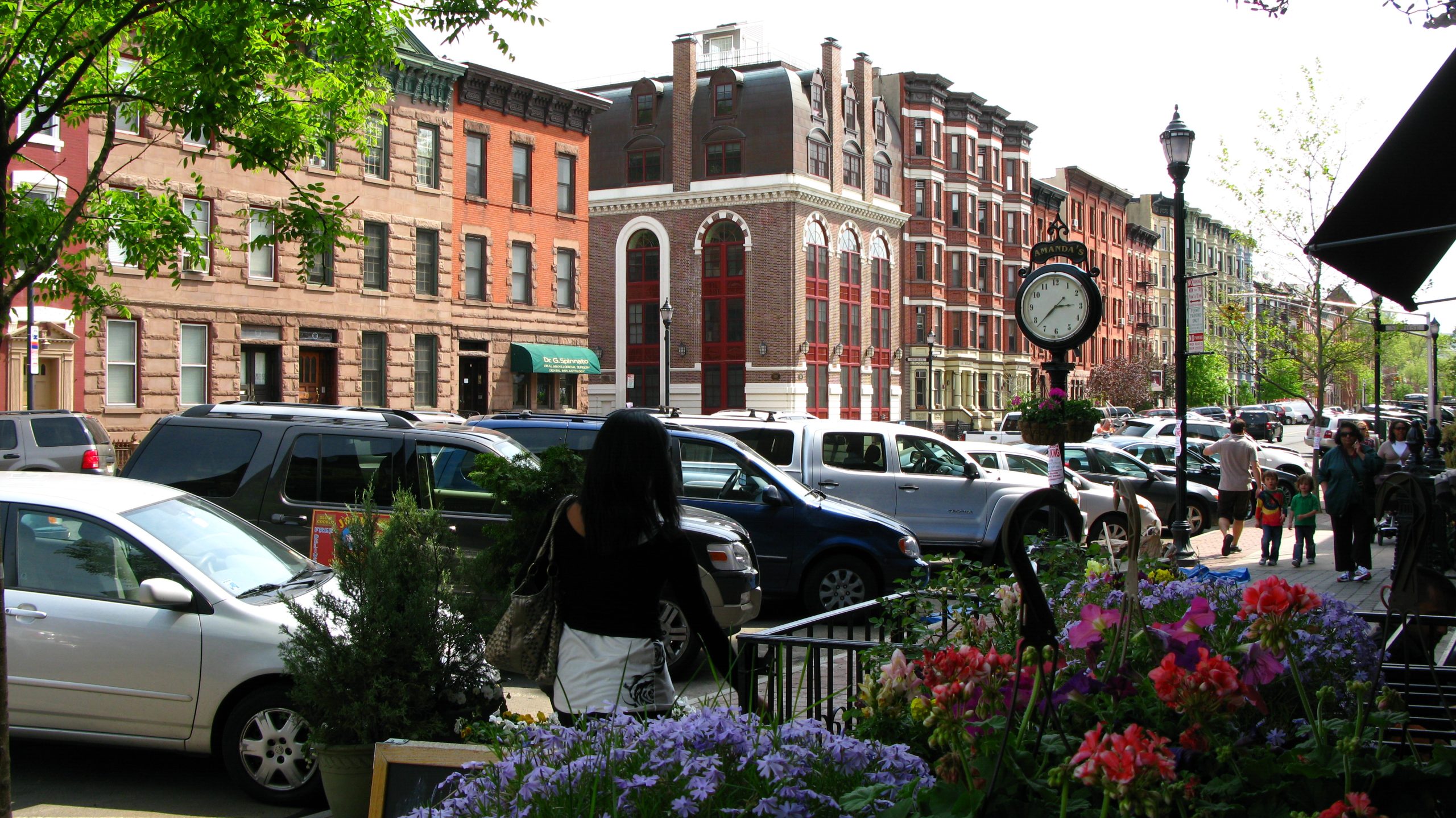
More generally, towns can promote greater income diversity by fostering more “missing middle” housing options like townhouses, duplexes, small apartment buildings, apartments above stores and even smaller single-family homes on smaller lots, options that are affordable to a wider range of households. That would have the added benefit of making towns more compact and walkable, as illustrated by New Jersey’s older boroughs and first-generation suburbs, where a wide mix of housing types was the norm. The only thing preventing this from happening in newer suburbs is local zoning.
But some towns are reluctant to offer a wider array of housing options under the current system of school district organization. If diverse housing options are the key to diverse neighborhoods and thus to desegregated schools, we need to neutralize the fiscal incentives toward large-lot zoning that work against housing diversity in the first place. Drawing school district boundaries over wider geographic areas (like counties) would reduce the number of districts and allow large commercial tax generators, like shopping centers and industrial buildings, to be more evenly distributed among them. Bigger districts would also share the costs of residential development (namely the costs of educating school children) over many municipalities, making each individual municipality less resistant to playing host to new housing.
If New Jersey wants its schools to be less segregated, we need to make sure towns continue to satisfy their affordable-housing obligations for lower-income households. Towns should also do their part to address the state’s broader housing affordability crisis by changing their zoning to allow a variety of housing types and price points. To make these steps easier for municipal leaders concerned about property taxes, organizing and funding public education at a higher level of government may be the first and best next step.
Related Op-Ed Articles

07/03/2025
11/20/2024

08/09/2023

04/14/2023
12/01/2020

10/25/2020

08/10/2020

06/25/2020
05/19/2020

05/17/2019

09/17/2018
09/06/2018

06/19/2018
05/17/2018
04/10/2018
03/14/2018

01/08/2018
12/17/2017

11/30/2017

10/30/2017
10/15/2017
09/17/2017

08/23/2017

06/11/2017

10/28/2014

03/19/2014

09/04/2013
11/30/2012

02/09/2012