

 Browse All News
Suburban sprawl is out. Smart growth, redevelopment and transit stations are in.




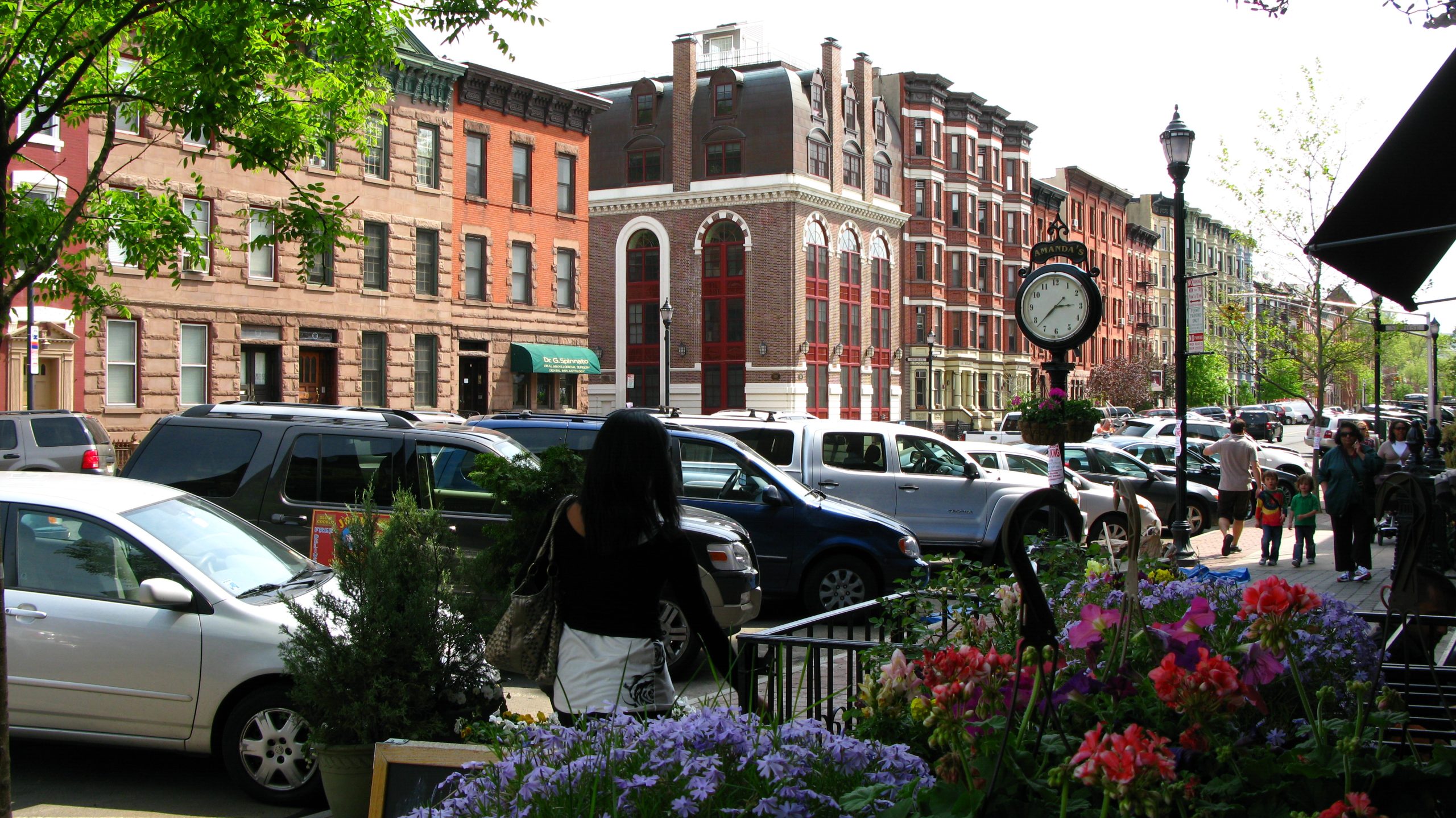
On May 25 the Census Bureau released new municipal population estimates, and the data confirm that a transformation is indeed happening in the state. A number of our urban and built-out municipalities have experienced growth since the recession. Built-out places – which also tend to be the more compact, walkable, and transit-accessible places – have reversed decades of stagnation and sometimes outright population loss, and are now the primary drivers of growth in the post-recession era.
Here’s what we learned by crunching the numbers:
Population growth in our eight urban centers outpaced statewide growth in recent years. Taken as a group, the cities of Newark, Jersey City, Paterson, Elizabeth, Trenton, Camden, New Brunswick, and Atlantic City – the eight urban centers designated by the State Development and Redevelopment – lost population every decade from 1950 through 1990, and then made incremental gains between 1990 and 2008. But from 2008 to 2016, this group contributed a full 15.4 percent of statewide population growth, a bigger percentage than their proportion of the state population (they made up 12.0 percent of total statewide population in 2016).
But not all of our urban centers are participating in the revival. Trenton, Camden, and Atlantic City all have fewer people in 2016 than they had in 2008, and all three have posted small population losses in each of the last two years. This means that the remaining five urban centers, led by a 9 percent growth rate in Jersey City, not only accounted for all the growth mentioned previously, but also made up for the minor losses in these three cities.
New Jerseyans are locating closer to transit. The 138 municipalities hosting rail transit stations as a group accounted for well above half – 58.8 percent – of the total statewide population increase from 2008 to 2016, after accounting for just 14.9 percent of the total increase from 2000 to 2008. Transit municipalities’ collective growth rate of 3.5 percent from 2008 to 2016 was nearly double that of the non-transit municipalities (1.9 percent) over the same time period.
More New Jerseyans are now moving into built-out places, where there is little undeveloped land left. The 188 municipalities that were at least 95 percent built out as of 2007 accounted for half (50.5 percent) of total statewide population growth between 2008 and 2016. This same group of municipalities actually lost population between 2000 and 2008, so the post-recession turnaround is remarkable.
New Jerseyans are moving to compact, walkable communities where there’s a mix of housing, retail, and commercial. The 118 municipalities that score well on a number of smart-growth metrics, including density and presence of mixed-use centers, grew by 4.1 percent between 2008 and 2016, outstripping the statewide growth rate of 2.6 percent. This is in stark contrast to the 2000-2008 period, during which the state as a whole grew by 3.5 percent and these 118 municipalities grew by only 0.5 percent. At the other end of the spectrum, the 100 municipalities that were less than 50 percent built out as of 2007 accounted for just 3.7 percent of the total statewide population increase between 2008 and 2016. In the prior eight years, they accounted for 27.2 percent of the total statewide increase.
Our hope is that those running for governor recognize both the challenges and the opportunities that the trends described above present. Our cities now need, more than ever, the resources to upgrade their infrastructure and invest in the amenities necessary to attract businesses and the Millennials that are eager to make their homes there. And our suburbs need the right tools to take the bold and difficult steps to turn themselves into smart-growth locations.
The following are some cost-effective and powerful strategies that will help the next governor meet these challenges and also drive economic growth:
-
- Refocus state transportation agencies on the mission of improving access to more destinations for more people.
- Support transit-oriented development and redevelopment through targeted tax credits and coordinated state policies and investments.
- Provide technical and financial resources to cities and towns to promote compact, walkable development.
The next governor of New Jersey will need to take a comprehensive approach to our state’s land use and infrastructure that acknowledges these new demographic, economic, and environmental forces shaping how and where we live.
Related Op-Ed Articles

07/03/2025
11/20/2024

10/11/2023

08/09/2023
04/14/2023
12/01/2020

10/25/2020

08/10/2020

06/25/2020
05/19/2020

05/17/2019

09/17/2018
09/06/2018

06/19/2018
05/17/2018
04/10/2018
03/14/2018

01/08/2018
12/17/2017

11/30/2017

10/30/2017
10/15/2017
09/17/2017
08/23/2017

10/28/2014

03/19/2014

09/04/2013
11/30/2012
02/09/2012