

 Browse All Resources
14 Years After Sandy: What do Population Growth, Housing Patterns, and a Changing Climate Mean for the Future of the Jersey Shore?
10/29/2026
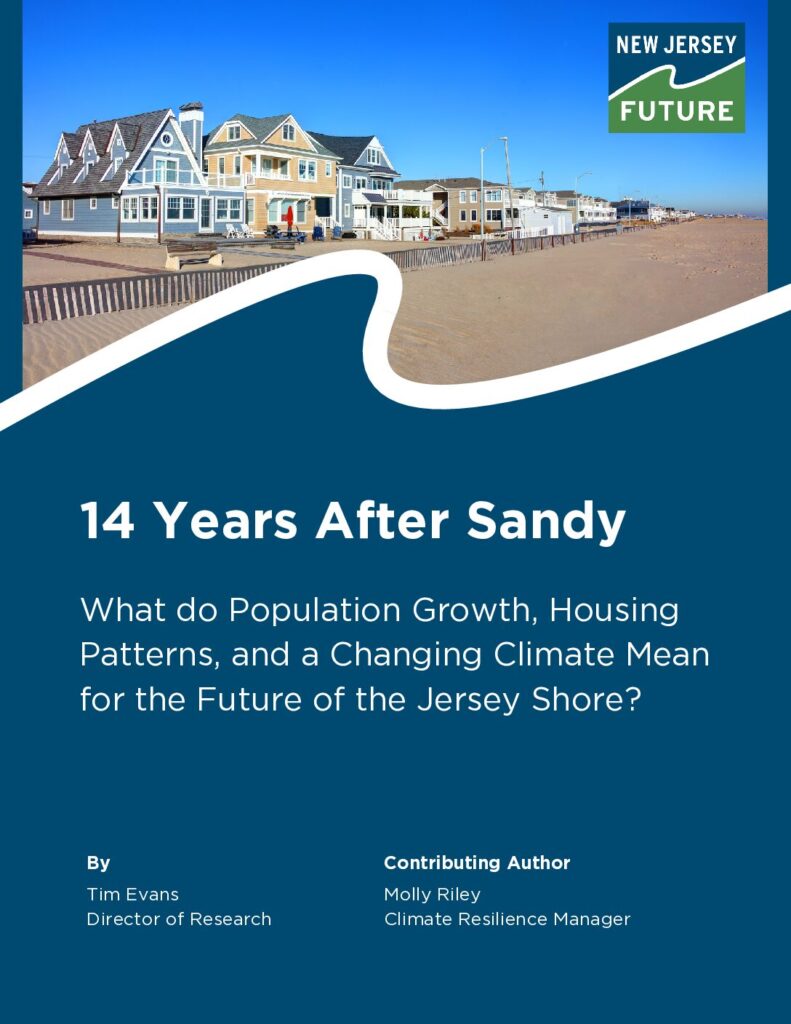

Download Full Report
After two decades of relatively slow population growth from 2000 to 2020, the Jersey Shore has started growing again. But recent growth does not look like the growth of the past.
- Recent growth at the Jersey Shore has been characterized by modest population growth, but without corresponding growth in the housing supply.
- Much of the change in the housing stock between 2010 and 2020 took place in the form of new, larger units replacing older, smaller ones, particularly via demolitions and reconstructions in the wake of Superstorm Sandy.
- Since 2020, the rise of remote work has enabled more people to call the Shore home, as seasonally occupied homes transition to year-round occupancy.
- The growing number of year-round residents in areas at risk from coastal flooding raises important implications for emergency response and post-disaster recovery, and increases the urgency of protecting not just homes but the public buildings, infrastructure, and services that full-time residents depend on.
- The increasing concentration of year-round residents and larger homes at the Shore also raises questions about who gets to live at the Shore, how the rest of the state pays for services for those residents, and how we preserve access to the Shore’s natural and man-made amenities for people who can’t afford to live there.
Understanding these trends is essential for building stronger, more resilient coastal communities. Read the full report to learn more.