Transfer of Development Rights and Clustering
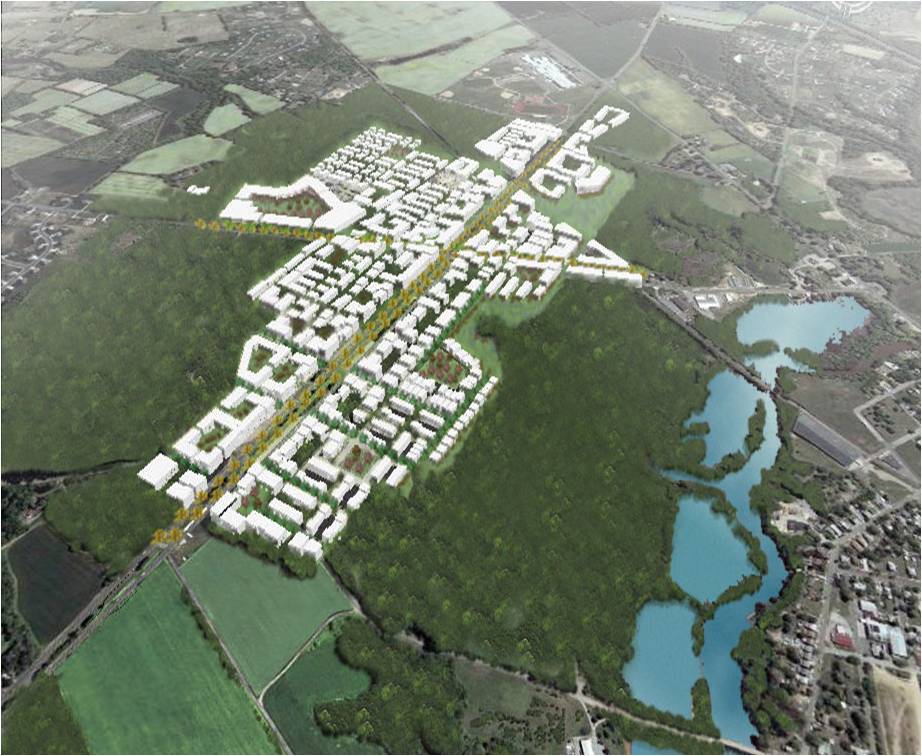
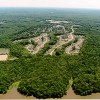
Proposed TDR receiving district for Woolwich, N.J. Courtesy GroupMELVINDesign
New Jersey municipalities have access to planning tools that can help preserve land and manage growth without having to rely solely on limited public funds allocated to land preservation. These mechanisms enable towns to transfer development from environmental, historic or agricultural areas in need of protection to places more suitable for growth. They range widely in scope and sophistication, from simple clustering provisions, where development is rearranged completely within a single parcel; to noncontiguous clustering, where development is transferred between two or more parcels; to the more complex and larger-scale transfer of development rights (TDR) option, where landowners in designated “sending areas” sell their development rights and agree to preserve those lands, and developers in designated “receiving areas” purchase those rights and with them the ability to build at a higher density than otherwise would be permitted.
TDR has been used successfully in New Jersey in Chesterfield and Lumberton townships, Burlington County and in the Pinelands region. Other attempts have encountered obstacles. With support from the William Penn Foundation, New Jersey Future convened a 40-member Transfer of Development Rights Task Force, which issued its final report in August 2010, recommending several statutory, regulatory and programmatic changes to facilitate the use of TDR and its cousins, clustering and noncontiguous clustering. As a result, New Jersey Future and other members from the TDR Task Force were instrumental in revising New Jersey’s Municipal Land Use Law (MLUL) to improve municipal access to the cluster and noncontiguous cluster tools. Three years after the publication of the TDR Task Force’s final report, Governor Christie signed these revisions into law (P.L.2013, c.106).
In addition to the work New Jersey Future has done, the Delaware Valley Regional Planning Commission convened a task force to study TDR issues in Salem County, N.J. The task force issued its final report (pdf) in June 2011. DVRPC also has a resource page for TDR in New Jersey and nationwide.
Second of a series of articles detailing strategies coastal states are examining in order to plan for sea-level rise. This article addresses ways to redirect development away from vulnerable areas.

New Jersey Future salutes the New Jersey State League of Municipalities’ executive director, Bill Dressel, who is retiring after 41 years with the organization.
New Jersey Future is offering two new webinars and a grant to encourage municipalities to take advantage of updated non-contiguous cluster development tools.
Two new pieces of legislation, dealing with economic incentives and non-condemnation in redevelopment areas, offer opportunities to focus New Jersey’s development in smart-growth areas.

New Jersey Assembly overwhelmingly approves the cluster development bill, which could see a Senate vote as soon as May 13.
This report from New Jersey Future examines the use of non-contiguous clustering as a land-preservation tool in nine New Jersey municipalities. May 2012.
An overview of cluster development in New Jersey, along with relevant resources.

Chesterfield is poised to become the state’s first municipality outside of the Pinelands to add significantly to its already impressive farmland preserve, using a Transfer-of-Development-Rights program.

See all New Jersey Future Blog posts and articles in this category »
Reports, Presentations and Testimony
- New Jersey Future Non-Contiguous Cluster Report August 2017
- NJFuture Cluster Presentation I Open for Municipalities
- How Clustering Works
- Clustering-Factsheet_11_5_2013
- Cluster-Development-Act-summary-of-key-provisions-10-13
- Case Studies of Non-Contiguous Clustering in New Jersey 04-12
- Case Studies in Transfer of Development Rights 8-10 (Intern report)
- Transfer of Development Rights Task Force Report 08-11-10
- Presentation: The Status of Transfer of Development Rights in New Jersey 12-10
- Presentation: Land Preservation Using Off-site Clustering 03-19-11
- Transfer of Development Rights (Updated) 05-04